How to Split Your Wedding Budget With Sample Budgets for €10k, €20k and €40k
The biggest share goes to the venue, food and drinks. Then come photography, outfits and flowers - and a little is always kept aside for surprises. Here’s how to split yours, with three real-number examples.
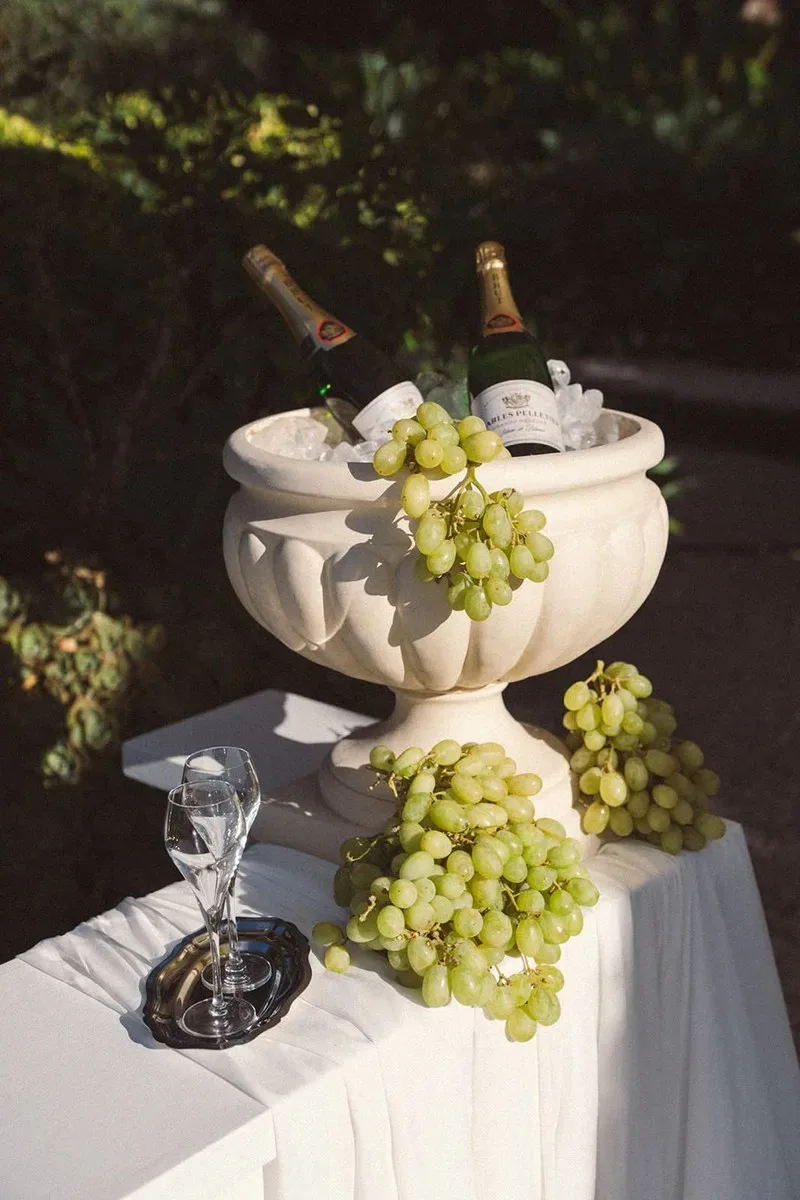
You’ve got a number. Now you need to know how much of it goes where - before the venue quietly eats 70% of it.
Here’s a typical way to split a wedding budget. It’s a starting point, not a rule: if photos matter more to you than flowers, move the money. But it’s much easier to adjust a plan than to build one from nothing.
The typical wedding budget breakdown
Venue, food and drinks: 45%
Photography and video: 12%
Flowers and décor: 9%
Outfits, hair and makeup: 8%
Music and entertainment: 7%
Other (cake, officiant, rentals): 4%
Transport: 3%
Invitations and stationery: 2%
Favours and gifts: 2%
Buffer for surprises: 8%
That adds up to 100%. Rings and the honeymoon are usually budgeted separately - if they’re coming out of the same pot, take them out first and split what’s left.
Sample budget: €10,000
A smaller wedding, roughly 40–50 guests.
Venue, food and drinks: €4,500
Photography and video: €1,200
Flowers and décor: €900
Outfits, hair and makeup: €800
Music and entertainment: €700
Other: €400
Transport: €300
Stationery: €200
Favours and gifts: €200
Buffer: €800
At this budget, the guest count does most of the work. Every 10 guests you don’t invite frees up roughly €800–1,000.
Sample budget: €20,000
A mid-sized wedding, roughly 70–90 guests.
Venue, food and drinks: €9,000
Photography and video: €2,400
Flowers and décor: €1,800
Outfits, hair and makeup: €1,600
Music and entertainment: €1,400
Other: €800
Transport: €600
Stationery: €400
Favours and gifts: €400
Buffer: €1,600
With 80 guests, that’s about €112 per guest for the venue, food and drinks.
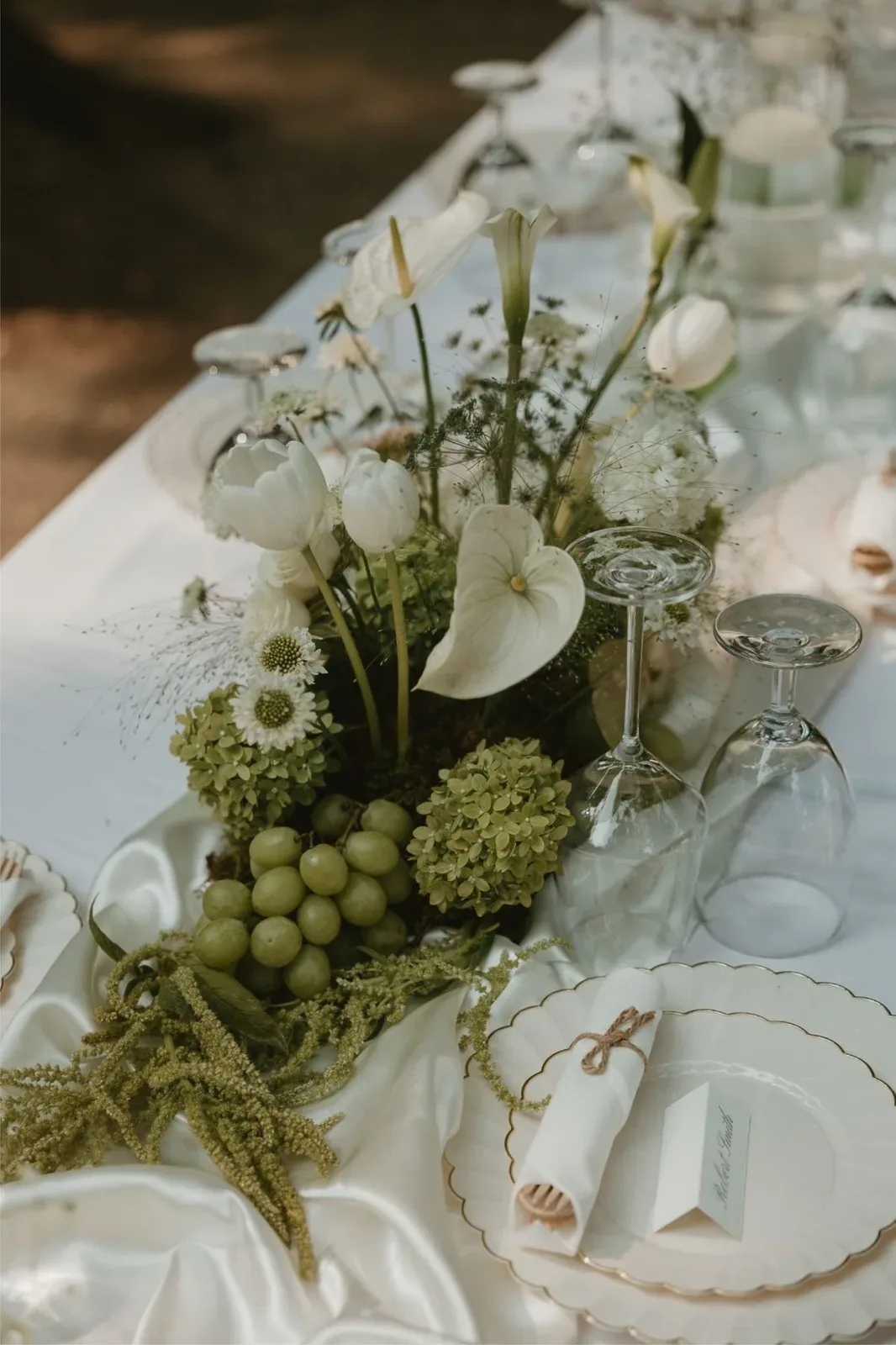

Flowers and drinks: two places where small choices add up fast.
Sample budget: €40,000
A larger wedding, or a smaller one with a bigger spend per guest.
Venue, food and drinks: €18,000
Photography and video: €4,800
Flowers and décor: €3,600
Outfits, hair and makeup: €3,200
Music and entertainment: €2,800
Other: €1,600
Transport: €1,200
Stationery: €800
Favours and gifts: €800
Buffer: €3,200
The same percentages work in any currency. Wedding prices vary enormously between countries and cities, so check a few local quotes before you commit to the split. (For more on what changes the price, see How Much Does a Wedding Cost in 2027?)
How to set your budget in 5 steps
Decide the total. The maximum you’re genuinely comfortable spending - not the maximum you could technically spend.
Agree who’s paying what. If parents are contributing, find out how much and whether it comes with opinions.
Take out the buffer first. Put 5–10% aside and pretend it doesn’t exist.
Pick your top two priorities. Food? Photos? Party? Give those more and trim the categories you care least about.
Track every cost from the first deposit. Write down what each thing costs, what’s been paid and when the rest is due.
The costs couples forget
These are the ones that turn a budget that looked fine into one that doesn’t:
Service charges and tax - often 10–20% on top of venue and catering quotes
Vendor meals - your photographer, band and planner need dinner too
Delivery, setup and collection fees for rentals and flowers
Alterations to the dress or suit
Overtime if the party runs late
Postage for invitations
Tips, depending on where you live
Accommodation for yourselves on the wedding night
How to save money without anyone noticing
Cut the guest list. It’s the single biggest lever: fewer guests means less food, drink, space, chairs and favours.
Choose a Friday, Sunday or off-season date. Many venues are noticeably cheaper outside summer Saturdays.
Pick in-season, local flowers, and reuse ceremony flowers at the reception.
Book a venue that includes catering, tables and chairs - fewer separate rentals.
Skip what you won’t miss. Favours are often left on tables. Your guests will remember the food and the people, not the napkin colour.
Frequently asked questions
What percentage of the wedding budget goes to the venue?
Usually around 40–50% for the venue, food and drinks together, since many venues include catering. On its own, a venue without catering is often around 15–25%.
How much does a wedding cost per guest?
Divide your total budget by your guest count. For the venue, food and drinks alone, a mid-range wedding often lands around €80–150 per guest, but it varies a lot by country and city.
How much should we keep aside for unexpected costs?
5–10% of the total. Most couples use it.
Are the rings and honeymoon part of the wedding budget?
Usually not. Most couples budget them separately. If they come out of the same money, take them out first and split what’s left.
What should we spend the most on?
Whatever matters most to the two of you. The usual biggest cost is the venue and food, because it scales with every guest.
In Sposera, you set a budget ceiling, log every cost with what’s paid and what’s due, and always see what’s left - before the next deposit, not after.