How to Make a Wedding Seating Chart Including the Tricky Family Seats
Start once your RSVPs are in, about 3–4 weeks before. Place the top table and your families first, then group guests by who they know, and keep the people who shouldn’t sit together apart. Here’s the step-by-step version.
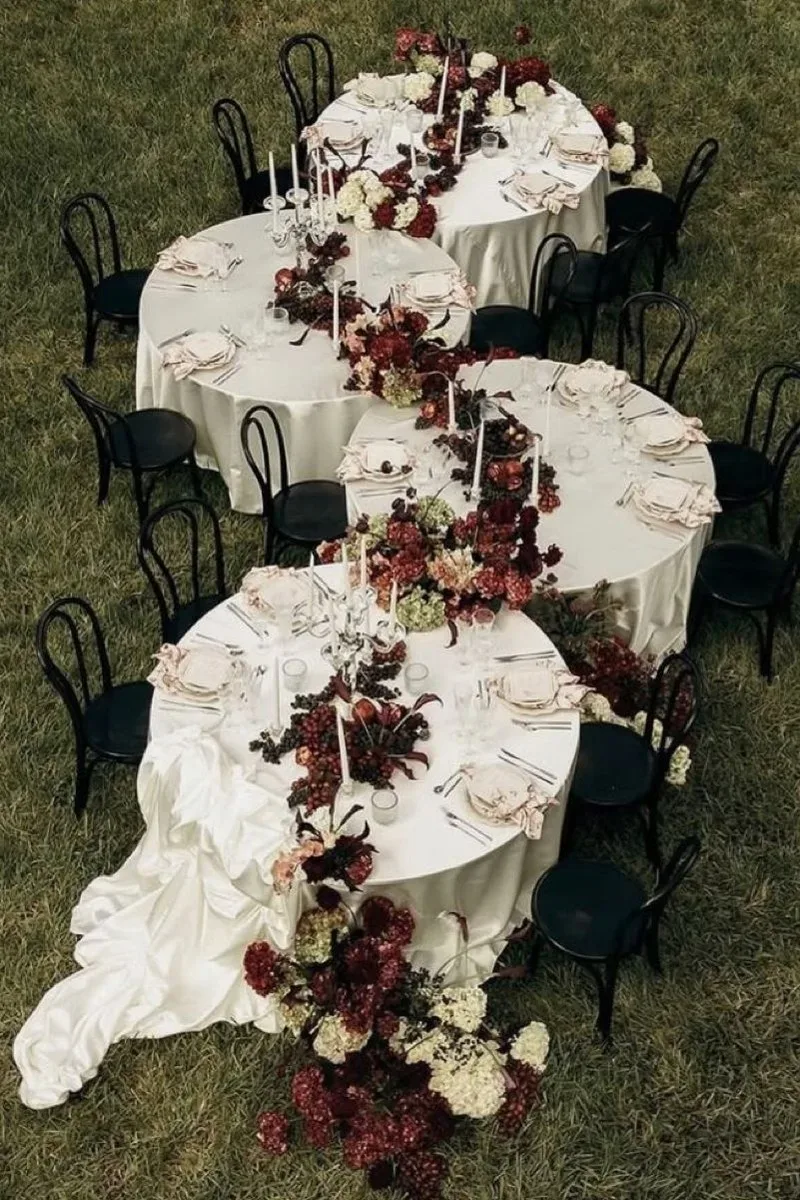
The seating chart is the moment wedding planning turns into a logic puzzle with feelings. Aunt Rita can’t sit near the speakers, your university friends need to be near the bar, and two of your cousins haven’t spoken since 2019.
The good news: there’s an order that makes it much easier. Start when your RSVPs are in, place the most important tables first, group everyone else by who they know, and only then solve the tricky ones.
When to make the seating chart
Start about 3–4 weeks before the wedding, right after your RSVP deadline. Earlier than that and you’ll redo it every time someone replies. Later than that and you’ll be doing it at midnight the week of the wedding.
You can sketch the table layout earlier - as soon as you know the venue and roughly how many guests are coming.
Step 1: Get the floor plan and the final guest list
Ask the venue for a floor plan with the room’s measurements, and find out which table shapes and sizes they have. You also need to know where the fixed things are: the dance floor, the band or DJ, the bar, the doors, the toilets.
Then make sure your guest list is final - who’s coming, who’s bringing a plus-one, and who has children with them.
Step 2: Choose your tables
Round tables (usually 8–10 people) are the easiest for conversation and the most common choice.
Long tables (banquet style) feel more relaxed and family-like, and often fit more people into the same room.
A mix works well: long tables down the middle, round ones around them.
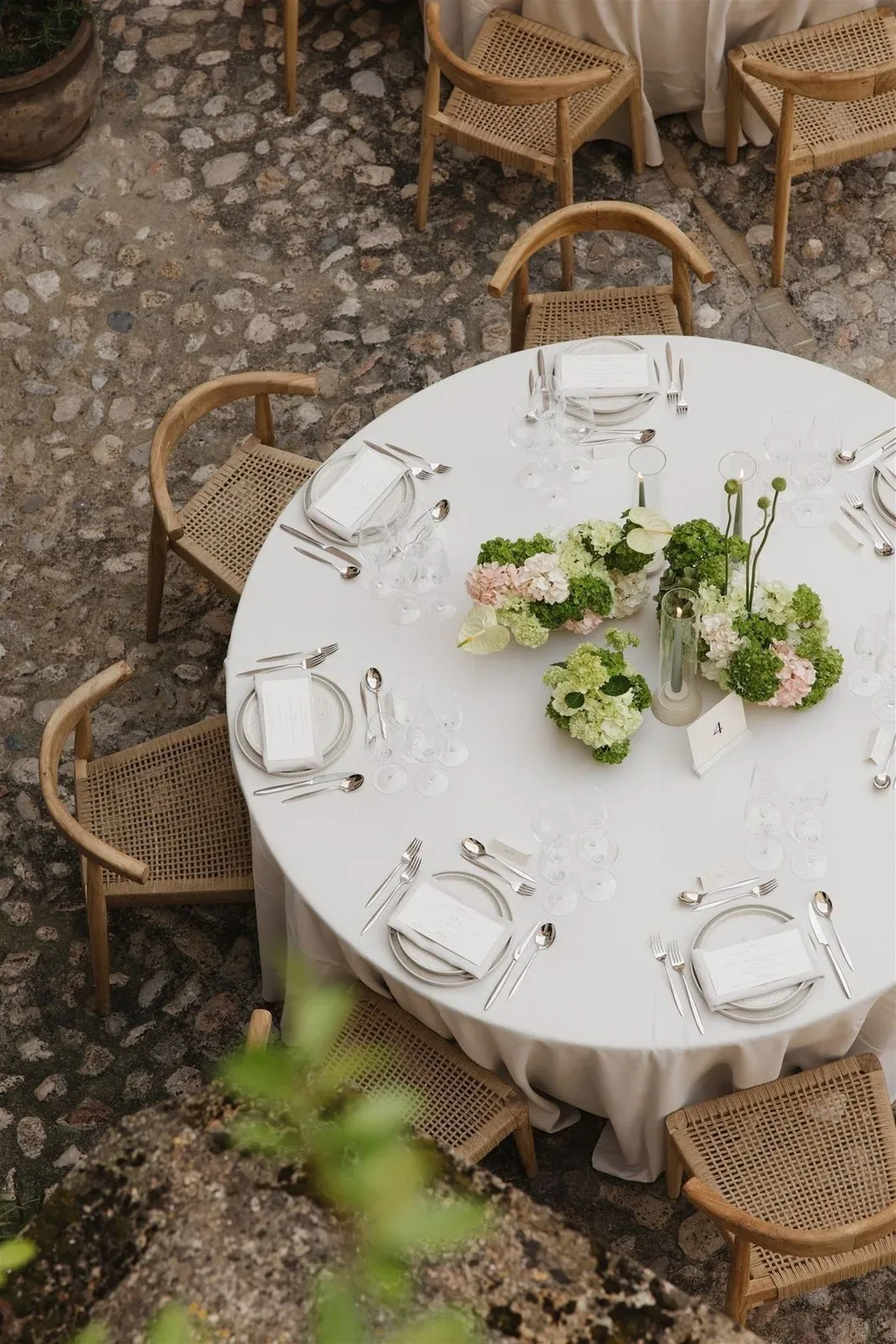
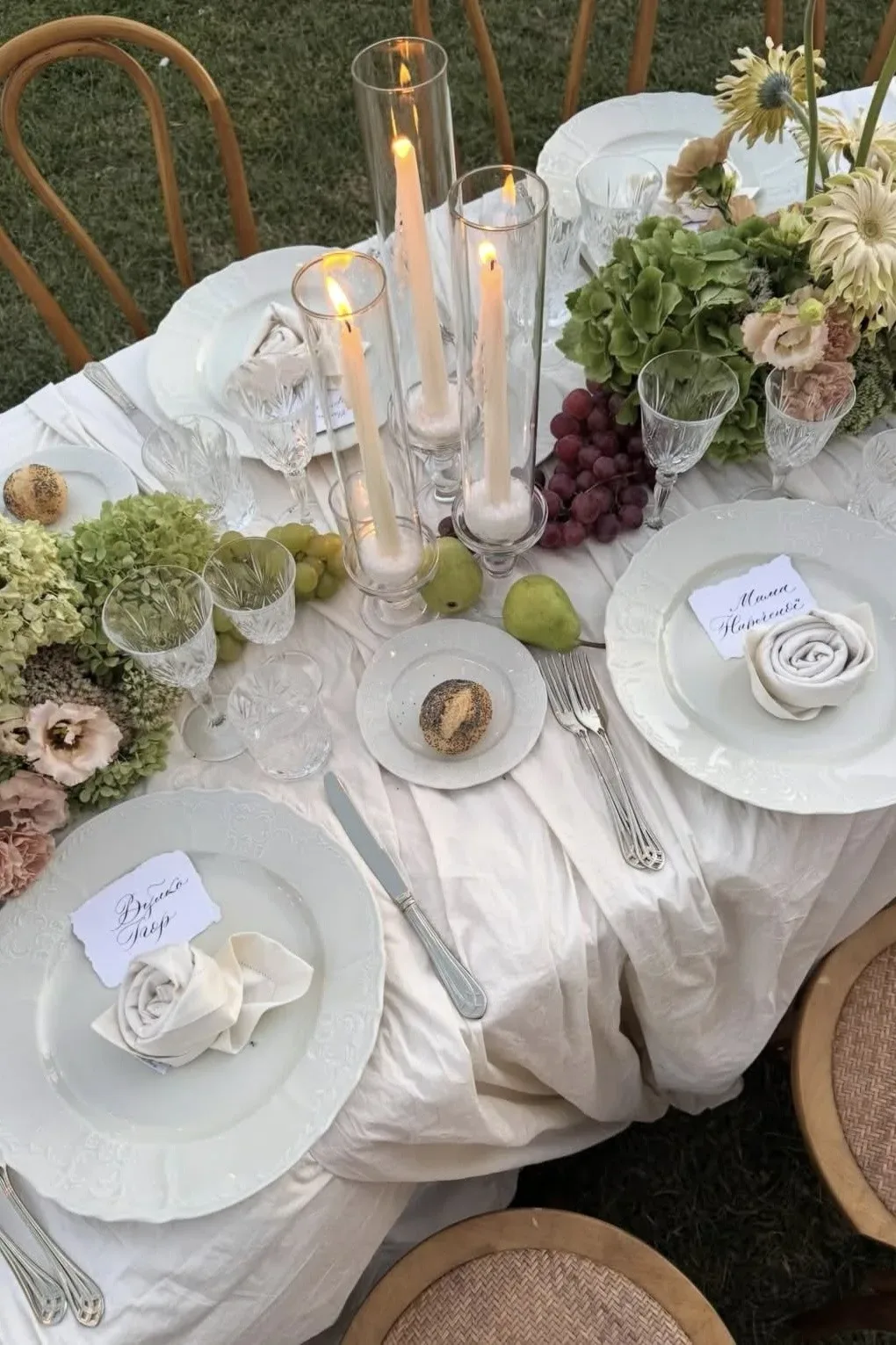
Long tables or round? Long ones fit more people; round ones are easier to talk across.
As a rough guide, allow about 60 cm of table edge per guest. Keep at least 1.5 metres between tables, so people can get up without everyone behind them having to stand too.
Step 3: Place your own table first
Decide where the two of you sit:
A top table with the wedding party, facing the room
A sweetheart table for just the two of you
A family table with your parents and closest people
Put it where everyone can see you - and where you can see them.
Step 4: Place family and the people who need the best seats
Next, the guests whose seats matter most:
Parents and grandparents - close to your table
Older guests - away from the speakers, close to the toilets and the exit
Anyone using a wheelchair or walking aid - an easy route, no squeezing between chairs
Guests with young children - near the door, for quick escapes
Step 5: Group everyone else by who they know
Now sort the remaining guests into groups: university friends, work friends, your parents’ friends, the neighbours. Fill the tables group by group.
When a group is too small for its own table, combine groups that will get along - people with something in common, a similar age, or a shared sense of humour.
The rule that saves most seating charts: everyone should know at least one other person at their table.
Step 6: Solve the tricky ones
Divorced or separated parents: give each of them their own table near yours, with their own people around them. Nobody has to be next to anyone.
Guests who don’t get along: put them at different tables, ideally not facing each other.
Single guests: seat them with people they know, not at a “singles table”.
Plus-ones: always seated next to the person who invited them.
The kids’ table: only for children who are old enough to sit without a parent - usually about 6 and up. Put it near their parents.
Step 7: Share it - and keep one version
Once it’s done, send it to the venue and caterer, together with any dietary needs and where they’re sitting. Make the seating board or escort cards from the same list.
Keep one version of the plan only. When a guest cancels the week before, change it there - not in the venue’s email, your notes and a printed copy all at once.
Seating chart mistakes to avoid
Starting before RSVPs are in - you’ll redo it three times
Forgetting vendor seats - your photographer and band need somewhere to eat too
Putting older guests next to the speakers
Leaving someone at a table where they know no one
Forgetting to tell the caterer who needs the vegetarian or allergy meal and where they’re sitting
Frequently asked questions
When should I make my wedding seating chart?
Start 3–4 weeks before the wedding, right after the RSVP deadline. Give the final version to the venue about a week before.
How many guests fit at a round wedding table?
A 150 cm (60-inch) round table seats 8–10 people. A 180 cm (72-inch) round table seats 10–12.
Do you need a seating chart for a wedding?
For a seated dinner, it’s strongly recommended - guests find their seats faster and the caterer can serve special meals correctly. For a buffet or cocktail-style reception, it’s optional.
Who sits at the top table?
Traditionally the couple, their parents and the wedding party. Many couples now keep it to the two of them and the wedding party, and seat parents at their own tables nearby.
Where should divorced parents sit at a wedding?
At separate tables, each with their own family and friends, both close to the couple’s table. That way nobody feels further from the couple than the other.
In Sposera, you draw the room to its real size, add tables of any shape, and drag guests onto their seats - their notes travel with them.