Wedding Planning Timeline: What to Do 12 Months, 6 Months, 1 Month and 1 Week Before
The short answer: budget, guest list, venue and date first, about 12 months out. Then the vendors who get booked up fastest, invitations 6–8 weeks before, and nothing new in the final week. Here’s the whole thing, month by month.
Most couples take around 12 to 18 months to plan a wedding. You can do it in less - plenty of lovely weddings come together in six - but the order stays the same: budget and guest count first, then the venue and date, then the vendors who get booked up fastest, then everything else.
Below is the full timeline, month by month. If you’re starting later than 12 months out, don’t panic. Do everything in the sections you’ve already passed first, then catch up.
The quick version
12+ months before: budget, rough guest list, venue, date
9–11 months before: photographer, caterer, band or DJ, officiant, wedding website
6–8 months before: save-the-dates, dress, florist, accommodation for guests
4–5 months before: cake, rings, transport, hair and makeup trial
2–3 months before: send invitations, menu tasting, finalise the day’s schedule
1 month before: RSVP deadline, seating chart, final payments
1 week before: confirm every vendor, pack, delegate, rest
12 months or more before the wedding
This is the foundation. Almost every later decision depends on these four, so do them in this order.
Set your budget. Decide the maximum you’re genuinely comfortable spending - including who’s contributing what - before you fall in love with anything. (Not sure how to split it? Here’s how to divide a wedding budget.)
Write a rough guest list. It doesn’t need to be final. You just need to know if you’re a 40-person wedding or a 140-person wedding, because that decides which venues you can even look at.
Book the venue. Popular venues book 12–18 months ahead, especially for Saturdays in summer.
Pick the date. Usually the venue’s availability chooses it for you.
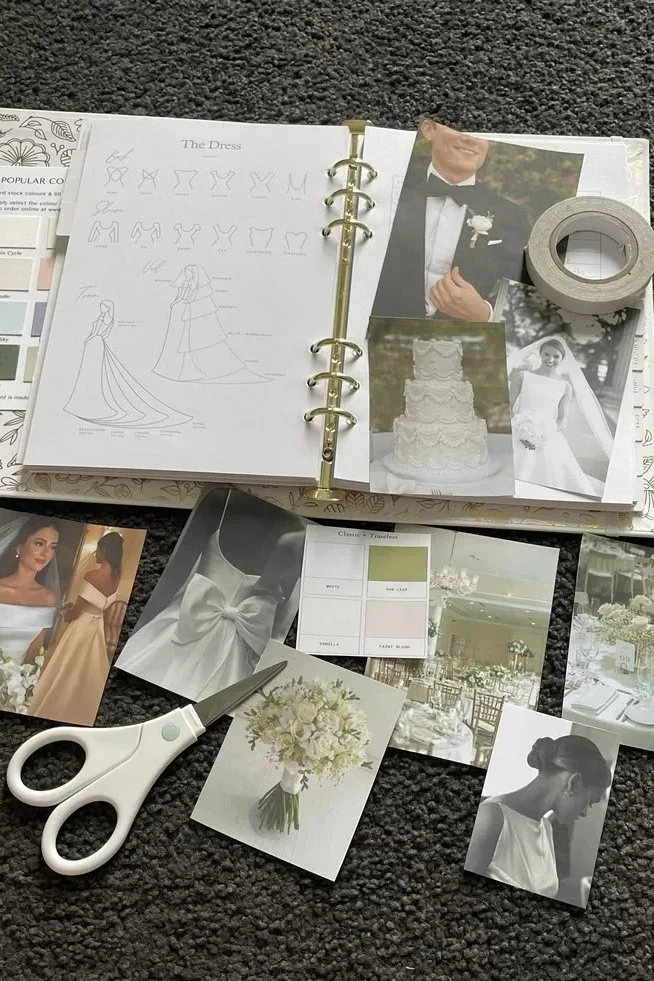
Also worth doing now: think about whether you want a wedding planner, and start a mood board so you’re not making every style decision from scratch later.


9–11 months before
Now book the vendors who can only be in one place on a Saturday.
Photographer and videographer - the good ones go first
Caterer (if your venue doesn’t provide one)
Band or DJ
Officiant or ceremony booking
Wedding planner or day coordinator, if you want one
This is also a good time to create your wedding website. Guests will start asking about the date, location and hotels the minute you announce, and a website answers them once instead of 80 times.
Before you pay any deposit, read the contract: cancellation terms, overtime fees, the payment schedule and exactly what’s included.
6–8 months before
Send save-the-dates. 6–8 months ahead for a local wedding, 8–12 months for a destination wedding.
Order the dress. Many bridal shops quote 6–8 months for ordering plus alterations. Suits are faster, but don’t leave them to the end.
Book the florist.
Sort out guest accommodation. Reserve a hotel room block or find places to stay near the venue, so out-of-town guests can book early.
Start a gift registry, if you’re having one.
4–5 months before
Order the cake.
Choose your wedding rings. Engraving and resizing take time.
Book transport - for the two of you, and for guests if the ceremony and reception are in different places.
Book hair and makeup, and schedule a trial.
Plan the ceremony: readings, music, vows.
Order invitations.
2–3 months before
Send the invitations 6–8 weeks before the wedding (around 3 months for a destination wedding). Set the RSVP deadline 3–4 weeks before the day.
Menu tasting and final menu.
Dress fittings.
Draft the wedding day timeline - from hair and makeup in the morning to the last dance - and share it with your vendors.
Buy the small things: guest book, favours, signs, the outfit for the day after.
1 month before
RSVP deadline. Chase whoever hasn’t replied - there will be someone.
Make the seating chart once the guest list is final. (Here’s how to make a seating chart step by step.)
Give the final guest count to the venue and caterer.
Make the final payments and note which ones are due on the day.
Get the marriage licence or registry paperwork sorted - rules differ by country, so check early.
Final dress fitting.
Break in your shoes. Seriously.
1 week before
Nothing new gets added this week. You’re confirming, not planning.
Confirm every vendor: arrival time, address, contact person on the day.
Send the final timeline to the vendors, the wedding party and whoever is in charge on the day.
Pack for the wedding night and honeymoon.
Prepare an emergency kit: safety pins, plasters, painkillers, stain remover, phone charger, snacks.
Hand over the jobs. Decide who collects the décor at the end of the night, who pays the band, who is the vendors’ point of contact. It should not be you.
Get some sleep.
The day before and after
The day before: rehearsal, drop off the décor and any items the venue needs, put the rings somewhere you’ll remember. Eat a proper dinner.
After the wedding: return any rentals, write thank-you notes (within about three months is polite), leave reviews for the vendors you loved, and change your name on documents if you’re doing that.
Planning in less than 12 months?
It’s absolutely possible. You just do the same steps closer together:
6 months: combine the first three stages into your first month. Book the venue, photographer and caterer in the same few weeks, and be flexible on the date - a Friday or a Sunday opens up far more options.
3 months: pick a venue that does catering in-house, skip save-the-dates and send invitations straight away, and go for a dress you can buy off the rack.
Frequently asked questions
How long does it take to plan a wedding?
Most couples plan for 12 to 18 months. A smaller wedding can be planned in 6 months, and a very small one in less. The main limit is how far ahead your favourite venue and vendors are booked.
When should you send save-the-dates?
6–8 months before the wedding, or 8–12 months before for a destination wedding or a date around a holiday.
When should wedding invitations be sent?
6–8 weeks before the wedding. For a destination wedding, send them around 3 months before so guests can arrange travel.
When should the RSVP deadline be?
3–4 weeks before the wedding. That leaves time to chase late replies, make the seating chart and give the caterer final numbers.
What should you book first for a wedding?
The venue, because it sets your date, guest capacity and often your caterer. Then the photographer, caterer and music.
Whether you have 18 months or 3, Sposera plans from your wedding date. It counts down to the day and brings up what’s due next - payments, room-block deadlines, RSVPs still to chase - so you always know what to do now, and nothing is left to the last week.